Land Acknowledgement

Dix Park History
The land we are on today is the ancestral land of many Indigenous tribes. Raleigh, itself, sits on the border of Tuscarora and Siouan territory. Over the past 14,000 years, this area was used for family life, nourishment, stewardship, justice, ceremony and healing. For the past 500 years, Native American communities from this region and across North Carolina have demonstrated resilience and resistance in the face of sustained displacement and removal, and complex traumatic and violent efforts to separate Indigenous people from their culture and their land.
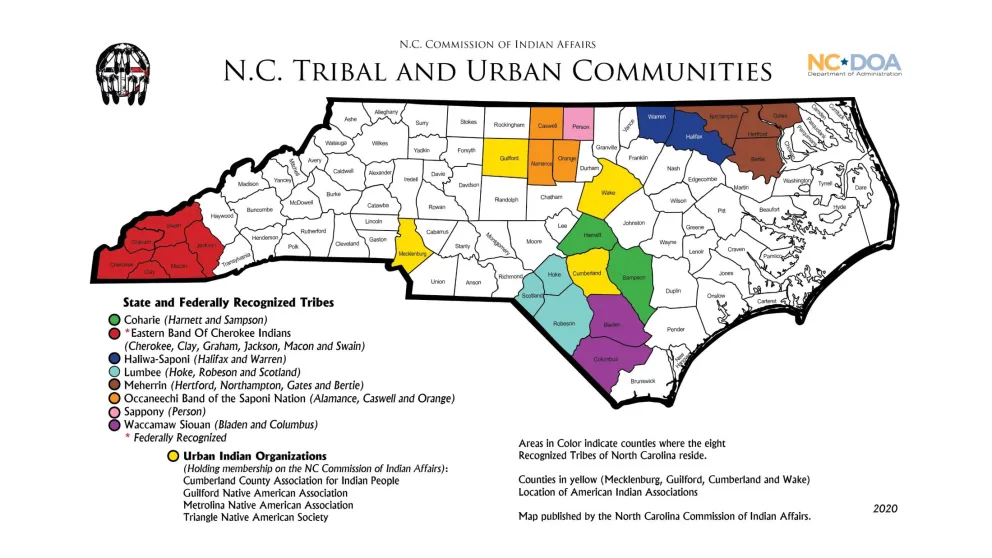
Today, the City of Raleigh recognizes the Dix Park site as broad contemporary Indigenous land of the Catawba, Coharie, Cherokee, Haliwa-Saponi, Lumbee, Meherrin, Occaneechi, Sappony, Tuscarora, and Waccamaw-Siouan, with American Indians living in all one hundred counties in this State.
Land Blessing and Acknowledgment Ceremony
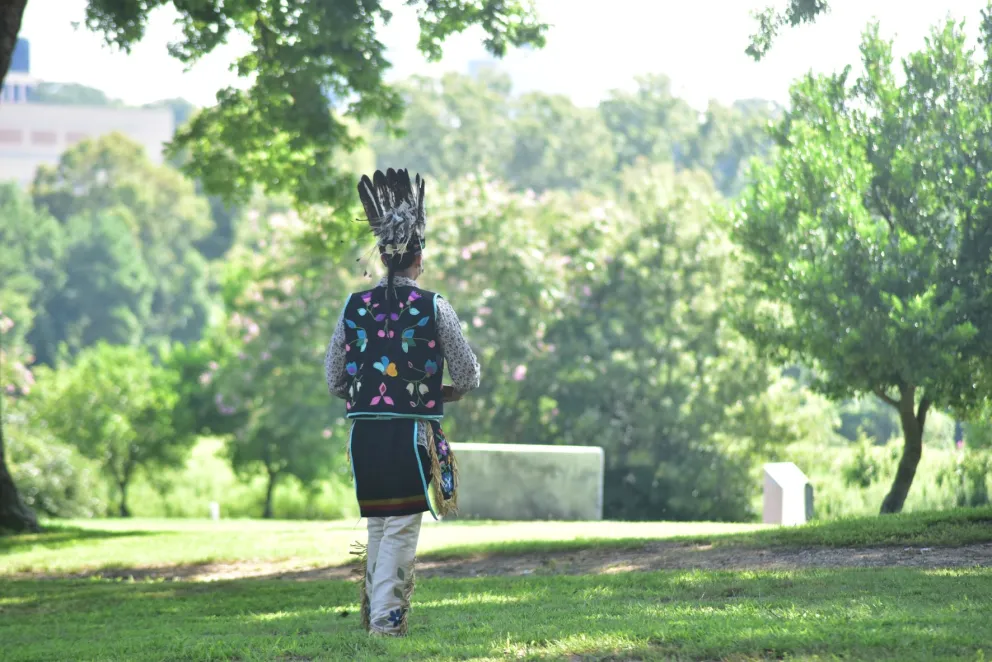
A land acknowledgement was first read on August 1, 2020, as part of a Native land acknowledgment and blessing of Dix Park held in partnership with the Triangle Native American Society and the Dix Park Conservancy. This ceremony was a first for the City of Raleigh.
We are grateful to the following individuals and organizations for their contributions to this landmark event: Kerry Bird and Danny Bell of Triangle Native American Society, Greg Richardson, former Director of NC Commission of Indian Affairs, Kaya Littleturtle (Tuscarora Tribe), and Trey Roberts (Haliwa-Saponi Indian Tribe), former Community Engagement Manager for Dix Park Conservancy.
Dix Park recognizes and celebrates the heritage of Indigenous communities and we are grateful for their ongoing and vibrant presence. Only by sharing Dix Park's deep and complex history can we move memory into action and truly create a park for everyone.